
Upper Grades (Ages 14-18)
- Title
- Upper Grades (Ages 14-18)
Items
-
 ‘But what can I do about it?’ How using Design Thinking in the classroom can increase advocacy in Year 11 girlsAdam Giblin (2021) 2021This action research project introduced design thinking as an approach to problem solving with two classes of Year 11 students studying GCSE Religious Studies in an all-girls’ environment. Students were supported in developing skills of empathy, redefining problems of social injustice, exploring (or ideating) potential solutions, and planning their future actions. This was done with the aim of increasing their confidence to advocate for others. Student feedback, in the form of online surveys and focus group interviews, was used to show that after using Design Thinking, students felt greater confidence to advocate and had even begun to take small steps towards acting on behalf of marginalised groups. It was evident that students found engaging in personal acts of support, such as signing petitions or educating themselves, to be doable but needed greater support to engage with the more active advocacy behaviours, such as protesting.
 -
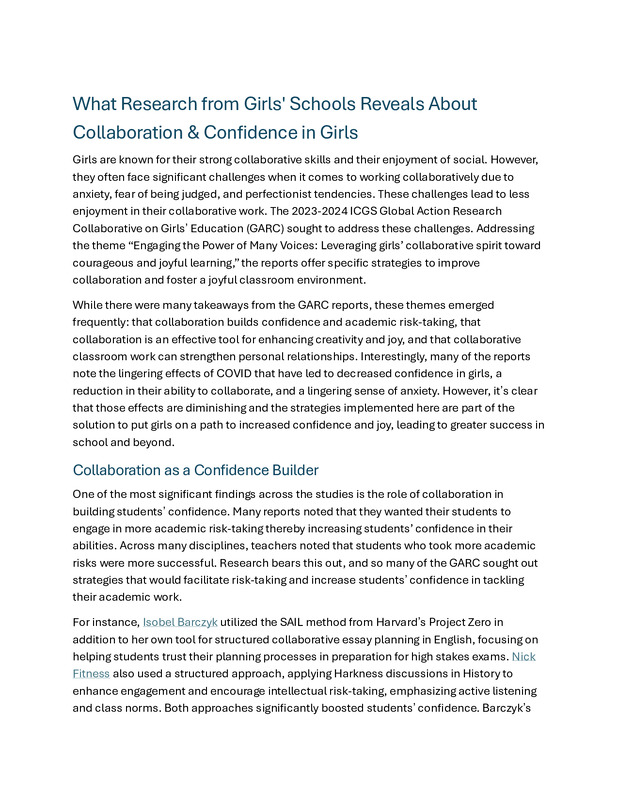 2023-24 GARC Research SummaryICGS 2024A summary of the findings of the 23-24 GARC Cohort on Collaboration
 -
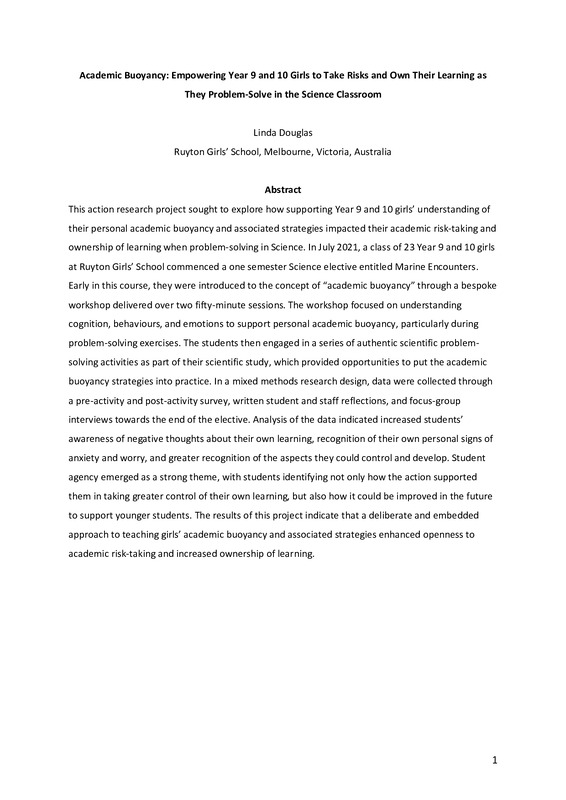 Academic Buoyancy: Empowering Year 9 and 10 Girls to Take Risks and Own Their Learning as They Problem-Solve in the Science ClassroomLinda Douglas (2021) 2021This action research project sought to explore how supporting Year 9 and 10 girls’ understanding of their personal academic buoyancy and associated strategies impacted their academic risk-taking and ownership of learning when problem-solving in Science. In July 2021, a class of 23 Year 9 and 10 girls at Ruyton Girls’ School commenced a one semester Science elective entitled Marine Encounters. Early in this course, they were introduced to the concept of “academic buoyancy” through a bespoke workshop delivered over two fifty-minute sessions. The workshop focused on understanding cognition, behaviours, and emotions to support personal academic buoyancy, particularly during problem-solving exercises. The students then engaged in a series of authentic scientific problem-solving activities as part of their scientific study, which provided opportunities to put the academic buoyancy strategies into practice. In a mixed methods research design, data were collected through a pre-activity and post-activity survey, written student and staff reflections, and focus-group interviews towards the end of the elective. Analysis of the data indicated increased students’ awareness of negative thoughts about their own learning, recognition of their own personal signs of anxiety and worry, and greater recognition of the aspects they could control and develop. Student agency emerged as a strong theme, with students identifying not only how the action supported them in taking greater control of their own learning, but also how it could be improved in the future to support younger students. The results of this project indicate that a deliberate and embedded approach to teaching girls’ academic buoyancy and associated strategies enhanced openness to academic risk-taking and increased ownership of learning.
 -
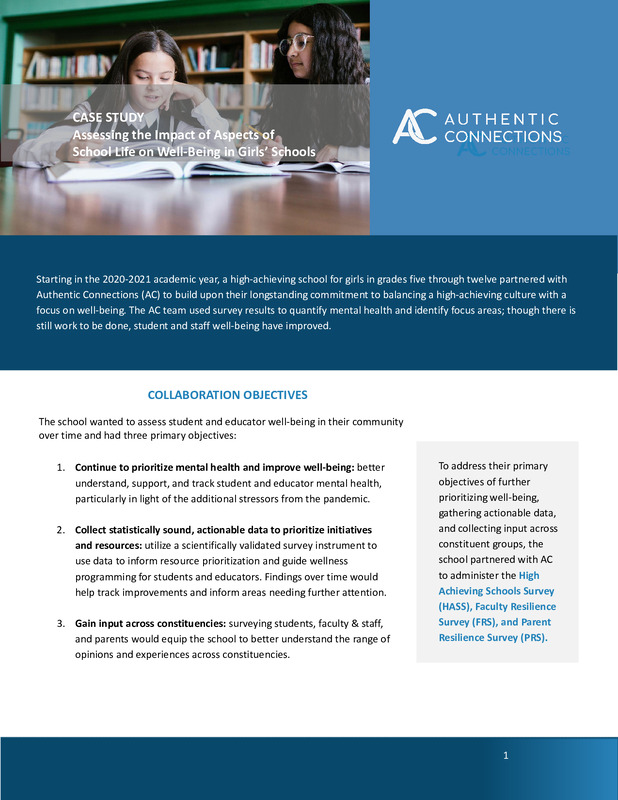 Assessing the Impact of Aspects of School Life on Well-Being in Girls' Schools(2025) 2025Starting in the 2020-2021 academic year, a high-achieving school for girls in grades five through twelve partnered with Authentic Connections (AC) to build upon their longstanding commitment to balancing a high-achieving culture with a focus on well-being. The AC team used survey results to quantify mental health and identify focus areas; though there is still work to be done, student and staff well-being have improved.
 -
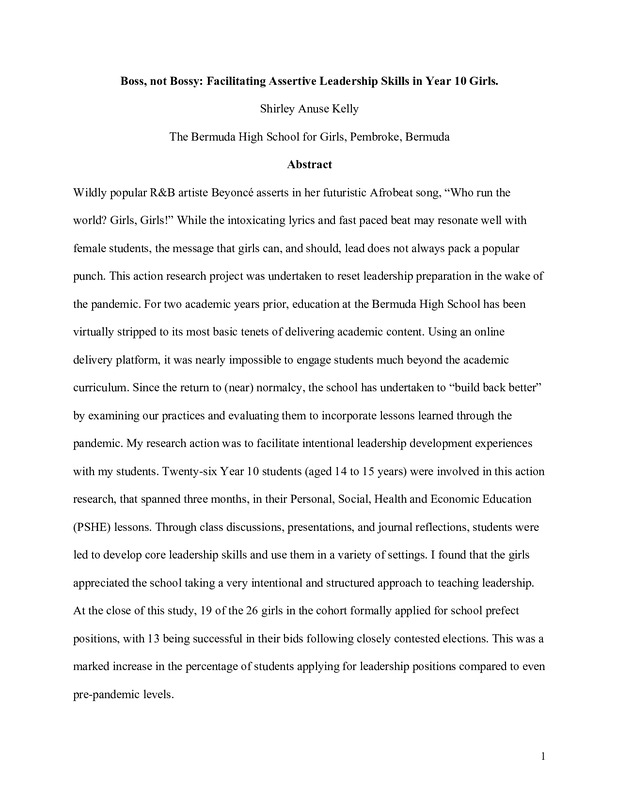 Boss, not-bossy: facilitating assertive leadership-skills in year 10 girlsShirley Anuse Kelly (2023) 2023Wildly popular R&B artiste Beyoncé asserts in her futuristic Afrobeat song, “Who run the world? Girls, Girls!” While the intoxicating lyrics and fast paced beat may resonate well with female students, the message that girls can, and should, lead does not always pack a popular punch. This action research project was undertaken to reset leadership preparation in the wake of the pandemic. For two academic years prior, education at the Bermuda High School has been virtually stripped to its most basic tenets of delivering academic content. Using an online delivery platform, it was nearly impossible to engage students much beyond the academic curriculum. Since the return to (near) normalcy, the school has undertaken to “build back better” by examining our practices and evaluating them to incorporate lessons learned through the pandemic. My research action was to facilitate intentional leadership development experiences with my students. Twenty-six Year 10 students (aged 14 to 15 years) were involved in this action research, that spanned three months, in their Personal, Social, Health and Economic Education (PSHE) lessons. Through class discussions, presentations, and journal reflections, students were led to develop core leadership skills and use them in a variety of settings. I found that the girls appreciated the school taking a very intentional and structured approach to teaching leadership. At the close of this study, 19 of the 26 girls in the cohort formally applied for school prefect positions, with 13 being successful in their bids following closely contested elections. This was a marked increase in the percentage of students applying for leadership positions compared to even pre-pandemic levels.
 -
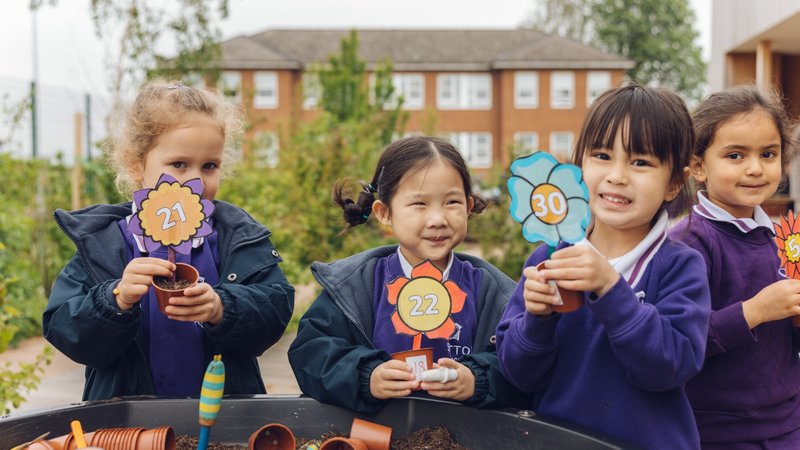 Empowering Environmental Guardians: Using Collaborative Systems Thinking to Solve Real-World Problems in a Year 10 Girls’ Science ClassroomAlex van der Loos 2024This action research study delves into the intersection of systems thinking, collaborative skills, and the empowerment of 14–15-year-old girls in a Year 10 Science classroom as kaitiaki (environmental guardians). The project aimed to enhance the confidence and collaborative capabilities of the girls through the implementation of systems thinking techniques within the context of an environmental awareness campaign centred around a local waterway, Wairau Creek. In teacher-selected teams of 4-6 students, the girls were granted autonomy in structuring their collaborative groups, with no predefined roles or instructions provided. Emphasising the interconnectedness of environmental systems, the curriculum guided students through the exploration of a nearby creek, conducting water health assessments and engaging with community experts to gain insights into the challenges facing the waterway. This study builds on existing literature regarding systems thinking, extending its application to address a notable gap – the impact on, and implications for, girls' collaborative skills. By allowing students the freedom to apply systems thinking as they deemed appropriate, this research uncovered how such an approach influences the development of teamwork, relationships, communication, and leadership skills among girls, with an aim to be shared with different departments across the school and to be easily implemented at any year level by educators across the globe.
 -
 Encouraging Risk-Taking in Year 12 Girls Through a Collaborative Approach to Solving Non-Routine Questions in Higher Level MathematicsJanet Hunter (2023) 2023Maximising examination readiness for Year 12 students between the internal “trial” examinations and the final state matriculation examinations six school weeks later is always a challenge, especially in the higher levels of Mathematics. Traditionally girls complete a practice paper each week, correct their mistakes, then move onto the next one. They do not necessarily master the techniques they were unable to do or got wrong in the practice papers, leaving them open to the same errors in the final examination. This research project addresses this preparation loophole for a group of ten pre-matriculation girls studying the elite course, Mathematics Extension 2 in New South Wales, Australia. Three elements for girls’ success were identified and implemented as the action of this action research project: first, facilitating Year 12 girls to work collaboratively on mathematical problems to increase confidence; second, working on difficult, non-routine mathematical problems; and third, not providing solutions to mathematical problems. The results are encouraging and suggest that confidence increases by working collaboratively to the point where girls are fearless and ready to attempt questions individually; the skill required for success in the final external matriculation examination.
 -
 Fostering Engagement in a Year 10 Girls’ Biology Classroom through Development of a Collaborative CultureClaire Saxon (2024) 2024Whilst girls demonstrate a propensity for social learning, classroom collaboration does not always lead to positive outcomes. Working together can lead to dissatisfaction, a reduction in engagement and a reliance on formulaic presentations rather than embracing a love of learning in a Year 10 Biology classroom. Girls at my school have been observed to collaborate effectively in Drama or Physical Education lessons but unable to transfer this skill to Biology. The aim of this action research project was to enable girls to change the perception of success in Biology and gather evidence of any change. This was the inspiration for an examination of re-addressing the balance in a more teacher-led classroom by adapting Ritchhart and Church’s (2020) routines in The power of making thinking visible. Girls in a Year 10 Biology class at Wycombe High School were participants in a study where deliberate routines were planned and delivered in a sequence of Biology lessons to engage students in learning and working together to achieve a common goal. Data were collected as part of a mixed methods approach. Data analysis suggested an increase in feelings of belonging and inclusion. Themes of academic trust, and the ability of students to use and organically apply the skills they learned during the collaborative learning activities were identified. Initial evidence also suggests that anxiety decreased as students were able to build critical relationships and trust with their peers whilst exploring more abstract ideas. The findings also indicate that girls were more likely to participate in robust learning conversations after the action. The intended outcomes served to challenge the apparent predominant pedagogy in different contexts which had been observed in a high-achieving, single-sex girls’ school and to foster a collaborative culture in areas where this is not usually expected. To develop this study further, there is a need to explore the relationship between collaboration, academic trust, and metacognition.
 -
 Fostering Grade 9 Girls’ Sense of Belonging Through the Use of Collaborative Lab Practicums as Authentic Assessments in ScienceAruna Chavali (2024) 2024In 2023, the gender gap in STEM remains significant, with women making up only 28% of the STEM workforce (UNESCO, 2023). Research suggests that fostering a sense of belonging in secondary Science classes is an effective strategy for increasing and sustaining the participation of girls in the STEM pipeline (Hansen,2023). The three guiding principles for a student to have a sense of academic belonging are interpersonal relationships, disciple identity, and a growth mindset (CELT Teaching Briefs). This action research project investigated how collaborative lab practicums, as authentic assessments, cultivated discipline identity, and promoted a growth mindset, to foster a sense of belonging for girls in a Grade 9 Physics classroom. The research, conducted at The Spence School, an all-girls K-12 institution, employed a mixed-methods approach, combining Likert-scale surveys, field observations, video recordings, and interviews. Twenty-nine Grade 9 students participated in this study. Findings indicate that collaborative lab practicums deepened students' understanding, and promoted collaborative learning. Students valued the hands-on, real-world application of theoretical knowledge, which facilitates a deeper connection to science. Additionally, the collaborative nature of the assessments encouraged teamwork and enhanced communication skills. The majority of students exhibited a growth mindset, emphasizing the importance of redoing and revising calculations as part of the learning process. While challenges, such as the fast-paced nature of practicums, were noted, overall, students expressed a preference for this collaborative, authentic learning approach. This study contributes valuable insights into fostering a positive sense of belonging in the Science classroom which could ultimately increase the participation of girls in the STEM pipeline.
 -
Gender bias in Australia’s senior science curriculumRoss et al. (2023) 2023Australian researchers have considered the challenge of engaging girls in STEM by analysing the role of gender bias in four senior secondary Australian science courses. The under-representation of girls and women in STEM is a well-recognised issue. Girls’ school educators regularly find themselves on the frontline of this issue as they implement initiatives and opportunities to combat the negative effect of gender interest stereotypes and a lack of positive female role models (Alliance of Girls Schools Australasia [AGSA], 2022a; 2022b; 2022c; Australian Government Department of Industry, Science and Resources, 2022). The researchers who developed this paper have discussed some possible interventions to reduce gender bias in Biology, Chemistry, Environmental Science and Physics classes and improve engagement rates for girls. This provides useful strategies that can be considered when delivering STEM content in girls’ schools. The authors assessed the latest curriculum offered for senior secondary science courses across Australia. Only courses that were “common across all curricula and [were] part of the Australian Tertiary Admissions Rank (ATAR)” were included (Ross et al., 2023, p. 4). Ross et al. (2023) considered the representation of women both through mentions of scientist names and mentions of scientific concepts (and how these were linked to gender). The project also considered the presence of a Eurocentric focus in the courses, although this was considered separately to the presence of gender bias. The initial outcomes of this research were interesting, if not unsurprising given the gender bias present more broadly in STEM. In the Australian Capital Territory, New South Wales, Tasmania, Victoria, and Western Australia curricula there were no female scientists mentioned (Ross et al., 2023, p. 7). Only 1.4 percent of mentions in the Queensland curriculum were female scientists, and 1.5 percent in the South Australia/Northern Territory courses (these were considered in combination as both use the same curriculum content) (Ross et al., 2023, p. 7). A national trend across all curricula was clear that in the majority of cases, students were exposed to scientists in these courses “via relevant discovering being named after the scientist who discovered them” (Ross et al., 2023, p. 13). This is problematic given that these naming conventions historically excluded women, and female achievements were regularly miscredited to men (Ross et al., 2023, p. 13). This has created a narrative of a “lone male genius” (Ross et al., 2023, p. 13). The researchers have suggested that this can reduce girls’ ability to perceive where they may fit in scientific fields and can decrease their performance in the classroom (Ross et al., 2023, p. 13). The concept of the “lone male genius” is highly problematic. There have been attempts to improve this approach in these courses by encouraging students to “investigate the ‘multiple individuals’ who contributed to a specific scientific discovery” (Ross et al., 2023, p. 14). While this can inadvertently minimise the work of women in STEM, it nonetheless provides educators with an opportunity to include a focus on significant female achievements in the field. It can also encourage a “student-driven approach to investigating the contributing scientists” (Ross et al., 2023, p. 14). Importantly, the authors note that while some Australian states are making an effort to shift away from this narrative, New South Wales “is the only state that actively reinforces this ‘lone male genius’ narrative” (Ross et al., 2023, p. 14). This holds significant implications for girls well beyond a presence of female scientists in the curricula of senior science courses. The researchers’ consideration of Eurocentrism within the curricula also highlighted further implications for girls who do not identify with Anglo-Australian backgrounds. The absence of scientists from culturally and linguistically diverse communities and female scientists in these courses “poses a significant hindrance” to girls including those with diverse backgrounds (Ross et al., 2023, p. 15). It can also inhibit their ability to develop a relatability towards positive role models. The researchers who developed this review of senior science courses have discussed a range of strategies. This includes the need to ensure significant female figures are actively integrated into the curricula for these courses. Ross et al. (2023) do note that including the names of female scientists alone is not a complete solution, as this would be a tokenistic measure. It would not address the true gender bias present in the curricula for these courses. The authors also believe that the barriers faced by female scientists should be studied so that girls can be fully aware of the significance of their achievements. Their research suggests that “without the historical and contextual backgrounds of women in STEM, it runs the risk of [once again] becoming
-
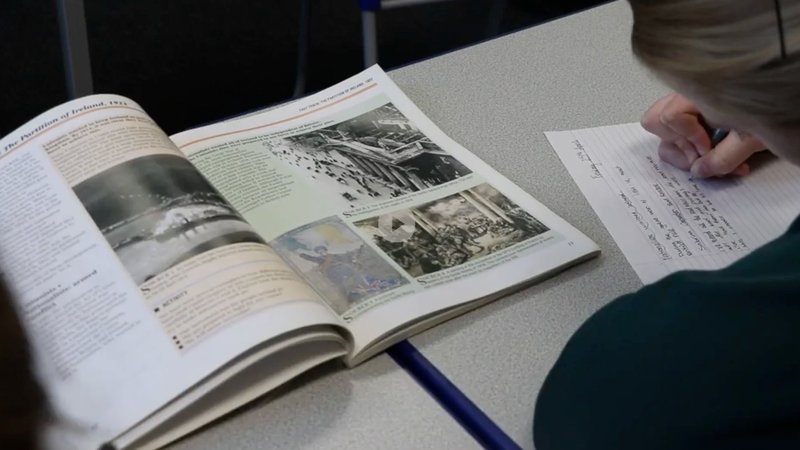 History Belongs to Us: Year 9 Girls Use Historical Significance to Craft Their CurriculumHolly Webb 2025This action research study investigated the impact of applying the skill of historical significance to meaningfully involve girls in the creation of their Year 9 history curriculum. A class of 25 girls was given explicit instruction on evaluating historical significance, and the girls were provided with multiple opportunities to evaluate the significance of the historical topics they were currently studying. The project culminated with students producing independently researched proposals for new topics they believed warranted inclusion in the school's Year 9 history curriculum, and also with the History department working with the students to implement some of these changes. Data collection techniques included questionnaires, focus groups, student work samples, and lesson observations. Thematic analysis was used to interpret the data; findings revealed that involvement in the curriculum design process and application of historical significance enhanced student agency and developed girls’ historical skills. Developing the skill of historical significance also enabled girls to distinguish between the agency of a historian and personal preferences, whilst also highlighting that comprehensive historical knowledge is crucial for students to effectively evaluate significance and exercise agency. The findings from this study are valuable for educators wanting to critically reflect on what may be considered canon in their subject or those hoping to involve students in meaningful curricular change.
 -
Is it a Matter of Skills? High School Choices and the Gender Gap in STEMDalit Contini, Maria Laura Di Tommaso, Anna Maccagnan and Silvia Mendolia (2025) 2025This article investigates the extent to which gender differences in academic skills contribute to the gender gap in STEM (Science, Technology, Engineering, and Mathematics) high school tracks in Italy. Focusing on the critical educational transition at age 14, when Italian students select among various secondary school types, the study examines whether disparities in mathematics and language skills—where boys typically outperform in math and girls in language—account for the underrepresentation of girls in STEM-oriented schools. The findings reveal that while academic skills do influence school choice, they only partially explain the gender gap in STEM enrollment, particularly among students from higher socio-economic backgrounds. For students from less educated families, skill differences have minimal explanatory power regarding the gender disparity in STEM choices. The research suggests that factors beyond measurable academic abilities, such as societal norms, stereotypes, and possibly differences in self-confidence or interest, significantly influence the gendered patterns in educational pathways. The study emphasizes that simply addressing skill gaps may not suffice to close the gender divide in STEM fields. Instead, comprehensive strategies that also tackle cultural and psychological barriers are necessary to encourage more equitable participation in STEM education and, by extension, in related career fields. Key Finding: "Teacher grades and test scores strongly influence choices, but the impact of ability differs by gender. Girls are less likely to opt for STEM high schools unless they excel in mathematics or have a strong comparative advantage in the subject. Conversely, boys often choose STEM pathways regardless of weak math performance and continue to do so even when they excel in Italian. Consistent with prior research, our findings suggest that girls require stronger evidence of their mathematical ability than boys to pursue STEM studies."
-
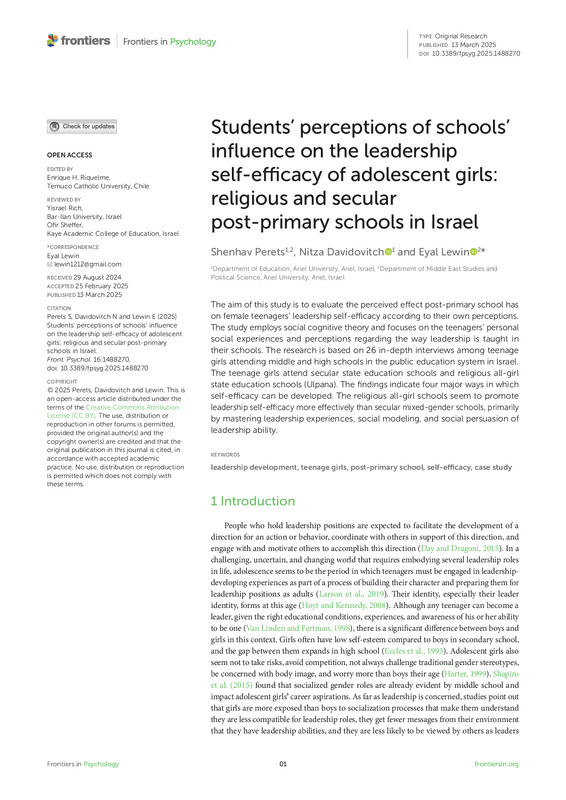 Students’ perceptions of schools’ influence on the leadership self-efficacy of adolescent girls: religious and secular post-primary schools in IsraelPerets Shenhav , Davidovitch Nitza , Lewin Eyal (2025) 2025Overview This qualitative study explores how different school contexts shape adolescent girls’ confidence in their leadership abilities. Drawing on Social Cognitive Theory, the authors focus on three main pathways that influence leadership self-efficacy: mastery experiences, social modeling, and social persuasion . The research highlights how school structures, culture, and peer/teacher interactions can either limit or expand opportunities for girls to see themselves as capable leaders, with meaningful differences emerging between secular mixed-gender schools and religious all-girls schools. Key Findings Mastery Experiences: Girls in religious schools had more opportunities to practice leadership, both in school and through youth organizations. Social Modeling: Religious school students identified teachers, older peers, and guides as leadership role models; secular school students did not report strong models. Social Persuasion: Religious schools provided consistent encouragement from teachers, peers, and youth leaders, reinforcing girls’ leadership confidence. Secular school students reported little direct encouragement. Overall Impact: Religious all-girls schools fostered stronger leadership self-efficacy than secular mixed-gender schools by providing richer experiences, visible role models, and affirmational support. Implications for Girls’ Schools Structured opportunities for leadership and visible female role models are critical in developing leadership confidence among adolescent girls. Encouragement and affirmation from adults and peers can significantly influence students’ belief in their leadership capacity. The findings challenge assumptions that secular, coeducational settings are inherently more supportive of girls’ leadership development, highlighting the unique value of all-girls environments. Reference Perets, S., Davidovitch, N., & Lewin, E. (2025). "Students’ perceptions of schools’ influence on the leadership self-efficacy of adolescent girls: religious and secular post-primary schools in Israel." Frontiers in Psychology, 16. https://doi.org/10.3389/fpsyg.2025.1488270
 -
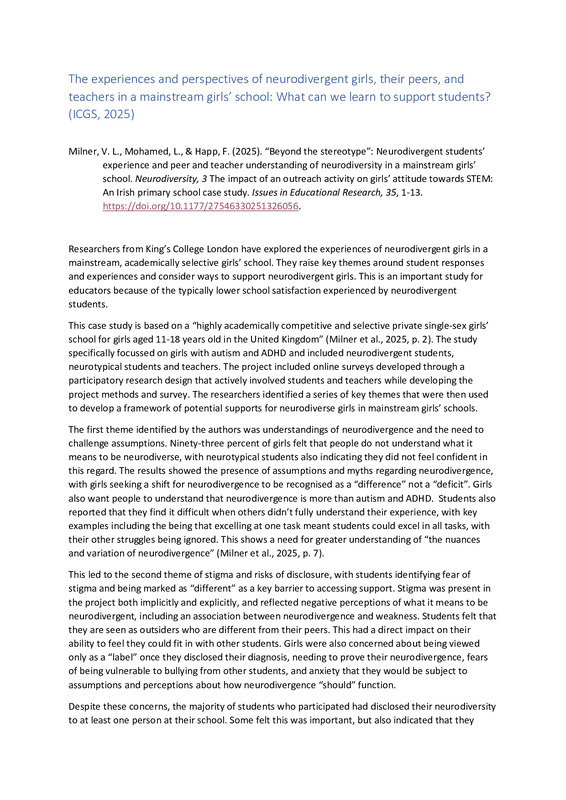 Understanding and supporting neurodiverse girls in mainstream schoolsMilner, V. L., Mohamed, L., & Happ, F 2025“Beyond the stereotype”: Neurodivergent students’ experience and peer and teacher understanding of neurodiversity in a mainstream girls’ school. Neurodiversity , 3. https://doi.org/10.1177/27546330251326056 Overview Researchers from King’s College London studied the experiences of neurodivergent girls (primarily those with autism and ADHD) in a selective all-girls’ school. Their findings shed light on how schools can better support these students. Key Findings Misunderstanding & Assumptions - 93% of students said people don’t understand what it means to be neurodiverse. - Common myths: excelling in one area = excelling in all areas; autism/ADHD are the only forms of neurodivergence. Stigma & Disclosure - Students feared being labeled, stereotyped, or bullied if they disclosed a diagnosis. - Teachers viewed disclosure as essential for adapting instruction, but worried about bias or misinterpretation. Camouflaging & Pressure - Many girls described “performing” to fit in—masking differences at high emotional cost, leading to exhaustion and stress. The Double Empathy Problem - Neurodivergent students felt misunderstood. - Teachers and peers lacked confidence in their understanding. - This mutual gap deepened stigma and isolation. Implications for Schools - Whole-School Education: Incorporate assemblies or lessons to reduce stigma and myths. - Safe Spaces & Trusted Staff: Provide quiet areas and support networks for overwhelmed students. - Inclusive Teaching: Use clear instructions, adapt communication, and show patience with different learning needs. - Amplify Student Voices: Involve neurodiverse girls directly in shaping strategies. - Universal Supports: Offer strategies for all students, including high-achieving but unidentified girls with neurodivergent traits.
 -
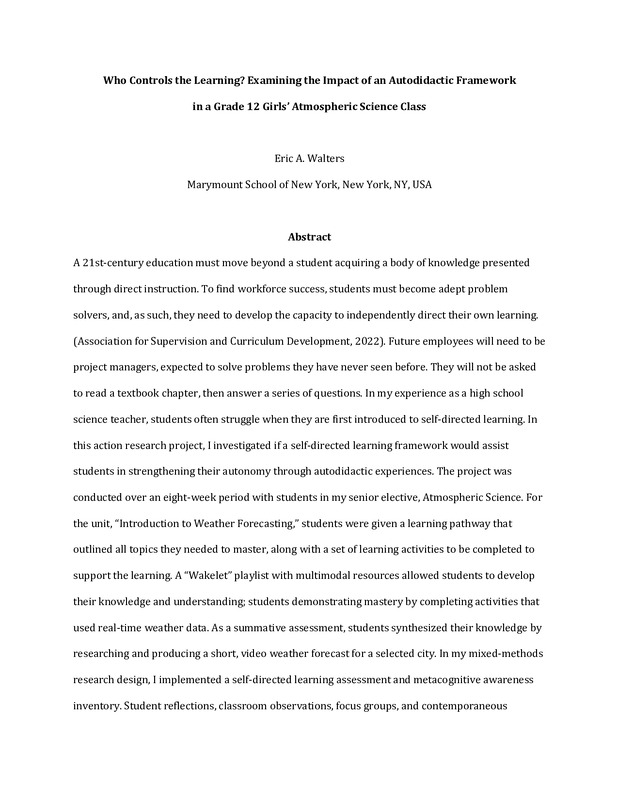 Who Controls the Learning? Examining the Impact of an Autodidactic Framework in a Grade 12 Girls’ Atmospheric Science ClassEric A. Walters (2023) 2023A 21st-century education must move beyond a student acquiring a body of knowledge presented through direct instruction. To find workforce success, students must become adept problem solvers, and, as such, they need to develop the capacity to independently direct their own learning. (Association for Supervision and Curriculum Development, 2022). Future employees will need to be project managers, expected to solve problems they have never seen before. They will not be asked to read a textbook chapter, then answer a series of questions. In my experience as a high school science teacher, students often struggle when they are first introduced to self-directed learning. In this action research project, I investigated if a self-directed learning framework would assist students in strengthening their autonomy through autodidactic experiences. The project was conducted over an eight-week period with students in my senior elective, Atmospheric Science. For the unit, “Introduction to Weather Forecasting,” students were given a learning pathway that outlined all topics they needed to master, along with a set of learning activities to be completed to support the learning. A “Wakelet” playlist with multimodal resources allowed students to develop their knowledge and understanding; students demonstrating mastery by completing activities that used real-time weather data. As a summative assessment, students synthesized their knowledge by researching and producing a short, video weather forecast for a selected city. In my mixed-methods research design, I implemented a self-directed learning assessment and metacognitive awareness inventory. Student reflections, classroom observations, focus groups, and contemporaneous comments also helped me understand changes in learning patterns. Data analysis suggested that students ended up in two camps: those with a fixed mindset who struggled with self-directed learning and those with a growth mindset who excelled with project planning. My results suggested that self-directed learning experiences must be carefully balanced with the students’ desire for collaborative work during learning. Furthermore, there must be an ongoing conversation between teacher and student about how students might understand their learning personas and thereby build agency in all types of learning.