
Teaching and Learning
- Title
- Teaching and Learning
Items
-
 ‘But what can I do about it?’ How using Design Thinking in the classroom can increase advocacy in Year 11 girlsAdam Giblin (2021) 2021This action research project introduced design thinking as an approach to problem solving with two classes of Year 11 students studying GCSE Religious Studies in an all-girls’ environment. Students were supported in developing skills of empathy, redefining problems of social injustice, exploring (or ideating) potential solutions, and planning their future actions. This was done with the aim of increasing their confidence to advocate for others. Student feedback, in the form of online surveys and focus group interviews, was used to show that after using Design Thinking, students felt greater confidence to advocate and had even begun to take small steps towards acting on behalf of marginalised groups. It was evident that students found engaging in personal acts of support, such as signing petitions or educating themselves, to be doable but needed greater support to engage with the more active advocacy behaviours, such as protesting.
 -
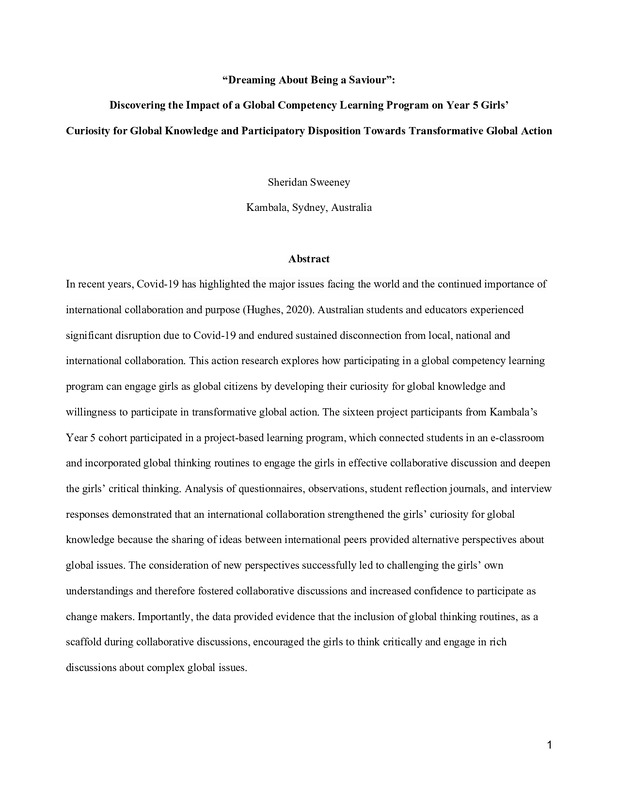 “Dreaming About Being a Saviour”: Discovering the Impact of a Global Competency Learning Program on Year 5 Girls’ Curiosity for Global Knowledge and Participatory Disposition Towards Transformative Global ActionSheridan Sweeney 2023In recent years, Covid-19 has highlighted the major issues facing the world and the continued importance of international collaboration and purpose (Hughes, 2020). Australian students and educators experienced significant disruption due to Covid-19 and endured sustained disconnection from local, national and international collaboration. This action research explores how participating in a global competency learning program can engage girls as global citizens by developing their curiosity for global knowledge and willingness to participate in transformative global action. The sixteen project participants from Kambala’s Year 5 cohort participated in a project-based learning program, which connected students in an e-classroom and incorporated global thinking routines to engage the girls in effective collaborative discussion and deepen the girls’ critical thinking. Analysis of questionnaires, observations, student reflection journals, and interview responses demonstrated that an international collaboration strengthened the girls’ curiosity for global knowledge because the sharing of ideas between international peers provided alternative perspectives about global issues. The consideration of new perspectives successfully led to challenging the girls’ own understandings and therefore fostered collaborative discussions and increased confidence to participate as change makers. Importantly, the data provided evidence that the inclusion of global thinking routines, as a scaffold during collaborative discussions, encouraged the girls to think critically and engage in rich discussions about complex global issues.
 -
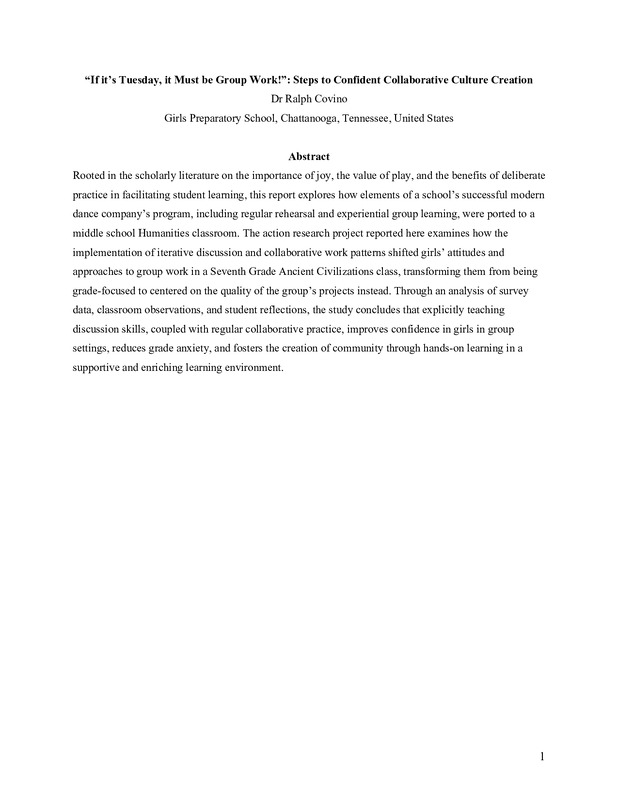 “If it’s Tuesday, it Must be Group Work!”: Steps to Confident Collaborative Culture CreationDr. Ralph Covino (2024) 2024Rooted in the scholarly literature on the importance of joy, the value of play, and the benefits of deliberate practice in facilitating student learning, this report explores how elements of a school’s successful modern dance company’s program, including regular rehearsal and experiential group learning, were ported to a middle school Humanities classroom. The action research project reported here examines how the implementation of iterative discussion and collaborative work patterns shifted girls’ attitudes and approaches to group work in a Seventh Grade Ancient Civilizations class, transforming them from being grade-focused to centered on the quality of the group’s projects instead. Through an analysis of survey data, classroom observations, and student reflections, the study concludes that explicitly teaching discussion skills, coupled with regular collaborative practice, improves confidence in girls in group settings, reduces grade anxiety, and fosters the creation of community through hands-on learning in a supportive and enriching learning environment.
 -
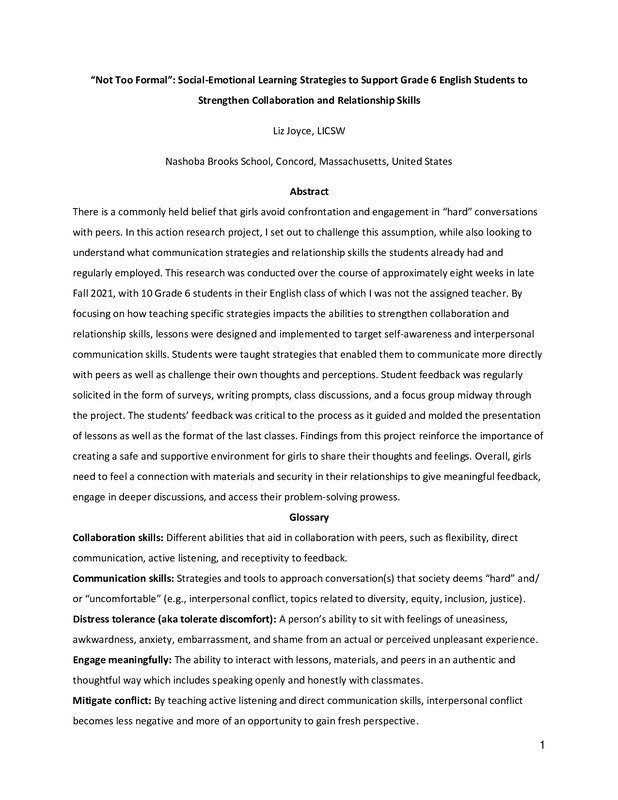 “Not Too Formal”: Strategies to Support Grade 6 English Students to Strengthen Collaboration and Relationship SkillsLiz Joyce 2022There is a commonly held belief that girls avoid confrontation and engagement in “hard” conversations with peers. In this action research project, I set out to challenge this assumption, while also looking to understand what communication strategies and relationship skills the students already had and regularly employed. This research was conducted over the course of approximately eight weeks in late Fall 2021, with 10 Grade 6 students in their English class of which I was not the assigned teacher. By focusing on how teaching specific strategies impacts the abilities to strengthen collaboration and relationship skills, lessons were designed and implemented to target self-awareness and interpersonal communication skills. Students were taught strategies that enabled them to communicate more directly with peers as well as challenge their own thoughts and perceptions. Student feedback was regularly solicited in the form of surveys, writing prompts, class discussions, and a focus group midway through the project. The students’ feedback was critical to the process as it guided and molded the presentation of lessons as well as the format of the last classes. Findings from this project reinforce the importance of creating a safe and supportive environment for girls to share their thoughts and feelings. Overall, girls need to feel a connection with materials and security in their relationships to give meaningful feedback, engage in deeper discussions, and access their problem-solving prowess.
 -
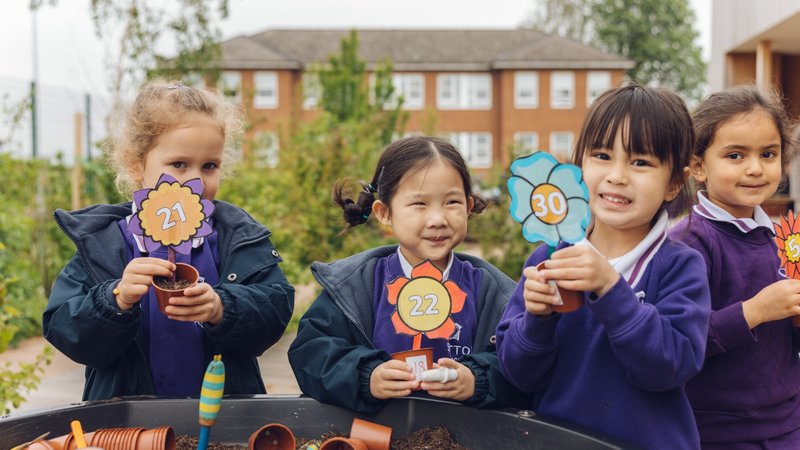
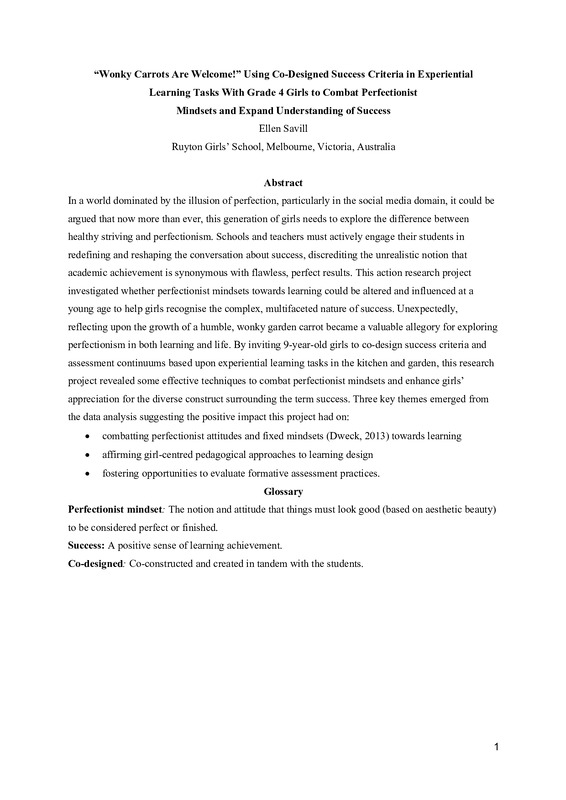 “Wonky Carrots Are Welcome!” Using Co-Designed Success Criteria in Experiential Learning Tasks With Grade 4 Girls to Combat Perfectionist Mindsets and Expand Understanding of SuccessEllen Savill (2023) 2023In a world dominated by the illusion of perfection, particularly in the social media domain, it could be argued that now more than ever, this generation of girls needs to explore the difference between healthy striving and perfectionism. Schools and teachers must actively engage their students in redefining and reshaping the conversation about success, discrediting the unrealistic notion that academic achievement is synonymous with flawless, perfect results. This action research project investigated whether perfectionist mindsets towards learning could be altered and influenced at a young age to help girls recognise the complex, multifaceted nature of success. Unexpectedly, reflecting upon the growth of a humble, wonky garden carrot became a valuable allegory for exploring perfectionism in both learning and life. By inviting 9-year-old girls to co-design success criteria and assessment continuums based upon experiential learning tasks in the kitchen and garden, this research project revealed some effective techniques to combat perfectionist mindsets and enhance girls’ appreciation for the diverse construct surrounding the term success. Three key themes emerged from the data analysis suggesting the positive impact this project had on:Ruyton Girls’ School combatting perfectionist attitudes and fixed mindsets (Dweck, 2013) towards learning affirming girl-centred pedagogical approaches to learning design fostering opportunities to evaluate formative assessment practices.
 -
 2023-24 GARC Research SummaryICGS 2024A summary of the findings of the 23-24 GARC Cohort on Collaboration
 -
A comparison of outcomes for girls from single-sex and co-educational schools using PISA dataMMG 2020A report analysing Australian and New Zealand PISA data from 2015 and 2018 reveals that girls attending single-sex schools outperformed girls from co-educational schools on academic measures of science, mathematics and reading. Students from girls’ schools also reported higher academic aspirations, more adaptive and flexible teachers, stronger feelings of school belonging, and a significantly lower prevalence of bullying (MMG, 2020, pp. 2-4). The analysis of PISA data by Macquarie Marketing Group (MMG) included a total of 314 individual measures comparing the responses and academic test results of girls from single-sex and co-educational schools, including girls attending government and non-government single-sex schools in Australia and New Zealand. Of the 314 PISA measures, girls from single-sex schools reported a positive difference on 227 — or 72% — of measures (p. 2). According to PISA 2018: Insights and interpretations , the OECD’s Programme for International Student Assessment (PISA) -- held every three years -- goes beyond assessing whether 15-year-old students can reproduce what they have learned in school to examine their ability to extrapolate across subject areas, apply their knowledge creatively, and demonstrate effective learning strategies. PISA also looks at teaching quality, academic support provided to students, and aspects of wellbeing and pastoral care (Schleicher, 2019, pp. 3-4). MMG (2020, p. 3) reports that in both 2015 and 2018, students from girls’ schools excelled on PISA’s three measures of academic performance in science, mathematics and reading, even after accounting for socioeconomic status. Compared to co-educated girls from the top 25% of socioeconomic backgrounds, single-sex girls from the top 25% of socioeconomic backgrounds: scored up to 10 percentage points higher on academic tests of science, mathematics and reading, scored 10 percentage points higher on measures of scientific enquiry, interpreting scientific evidence, procedural and epistemic science knowledge, physical science and life science, and scored up to 7 percentage points higher on literacy measures of reading evaluation and reflection, locating information, and understanding information. The analysis of PISA data from Australia and New Zealand also found that students from girls’ school scored higher on measures of academic engagement, teacher effectiveness, involvement in science, and enthusiasm for science. In addition, single-sex educated girls are considerably more likely to aspire to a university education, with 69% intending to complete a university-level degree or doctorate compared with 51% of co-educated girls (pp. 2-4). MMG’s analysis demonstrates (pp. 2-3) that girls at single-sex schools are more likely to report committed and passionate teachers who use adaptive and flexible instruction strategies in classrooms. They also report less disruptive behaviour in class and an environment that is more conducive to fulfilling their learning goals. Compared with girls in co-educational schools, students at girls’ schools are more likely to: receive encouragement from teachers to express their opinions (69% vs 64%), receive help from teachers to assist them with their learning (60% vs 52%), benefit from teachers adapting lessons to meet student needs (59% vs 48%), never or almost never experience an English classroom in which they cannot work well (42% vs 31%), and never or almost never experience a science classroom in which they cannot work well (41% vs 29%). In addition, MMG reports (p. 4) that girls at single-sex schools enjoy school more than girls from co-educational schools. They experience less bullying, make friends more easily, and feel a stronger sense of connection to school. Compared with their co-educated counterparts, girls from single-sex schools: never or almost never experience bullying (79% vs 71%), make friends and feel they belong at school (74% vs 70%), and never or hardly ever arrive late to school or engage in truancy (74% vs 66%). Overall, MMG noted (p. 4) that “across all forms of bullying, more single-sex female students reported never experiencing bullying behaviour” in Australia and New Zealand. This includes girls from single-sex schools being more likely than co-educated girls to report: never or hardly ever being hit or pushed by other students (92% vs 85%), never or hardly ever having belongings taken or destroyed by other students (90% vs 83%), never or hardly ever being threatened by other students (89% vs 78%), and never or hardly ever having nasty rumours spread about them (73% vs 62%). In conclusion, MMG’s analysis of 2015 and 2018 PISA data reveals that girls’ schools are better placed to prepare girls for success at school and in later life. Girls’ schools not only produce strong academic results, including in vital STEM fields, but they also create learning environments and experiences t
-
 Assessing the Impact of Aspects of School Life on Well-Being in Girls' Schools(2025) 2025Starting in the 2020-2021 academic year, a high-achieving school for girls in grades five through twelve partnered with Authentic Connections (AC) to build upon their longstanding commitment to balancing a high-achieving culture with a focus on well-being. The AC team used survey results to quantify mental health and identify focus areas; though there is still work to be done, student and staff well-being have improved.
 -
At least 1.9 million students in England are not ready for their next stage of learning: Preparing to support girls in an increasingly complex world(2025) 2025The 2025 Pearson School Report is the fourth annual report produced by Pearson, one of the world’s largest education companies, best known for its work in publishing, assessments, and digital learning solutions. The report provides a comprehensive analysis of how school experiences are shaping students, highlighting the academic, emotional, and systemic challenges currently faced by educators and learners. It also offers recommendations for school leaders and educators to consider as they plan for the future of teaching and learning. Drawing from responses of over 14,000 stakeholders including teachers, students, tutors, and home educators, the report’s findings highlight key challenges that are directly relevant to principals who set priorities for both learning and student wellbeing. Crucially, this year’s data reveals that approximately 1.9 million students in England (including 1.65 million in primary and secondary school, and over 250,000 in college) are not emotionally or academically ready for their next educational stage. This readiness gap has broad implications for learning outcomes, student retention, and future employability. At the primary level, teachers believe that 32 percent of students are not ready for progression. At secondary level, this figure sits at 31 percent. It is even higher for college level, with 43 percent of students aged 16 to 18 considered to be unready for their next stage of life and learning. The lack of readiness is consistent across phases but manifests differently by age group. The driving factors behind these readiness gaps vary, but include special educational needs and disabilities as the largest cited reason. Younger students speak about emotional barriers including fear and feeling like they are too young to progress. When teachers were asked why they felt secondary students were not ready to progress, the commonly cited reasons were a lack of self-motivation, independence and social maturity. For those beyond secondary school, it is felt that key challenges include a lack of skills surrounding digital wellbeing, critical thinking and writing skills. Students often say they know what they want to do, but lack the knowledge to know how to put those ideas and plans in place. Knowing that students want to progress is critical. The next step is understanding and developing ways to support them to achieve this goal. This is a significant challenge for educators, especially when students want to progress but don’t yet feel equipped to do so. Given this, the report highlights four key student outcomes that educators themselves feel are priorities in approaching this challenge: self-confidence and awareness, a love of learning, life skills, and an understanding of the wider world. These outcomes can be supported through developing problem-solving skills, critical thinking, resilience, and confidence. These skills can help students navigate successful educational transitions. They are also important skills that can support girls’ general wellbeing at a time when they are at risk of increased rates of anxiety, depression and other mental health symptoms. Interestingly, despite these various contributing factors to this lack of readiness, secondary students were able to recognize the long-term value of learning and the usefulness of skills. This highlights an area that could become a relevant intervention to help address this challenge. This is an important observation against the backdrop of key barriers to future learning identified by the Pearson report, which included attendance, special education needs and/or disabilities, behavior, mental health, and student disengagement. Other barriers identified in the Pearson report include curriculum and assessment, which college students feel affects them adversely. Teachers are also seeking less curriculum volume and want more flexible assessment options. All these options respond to a key finding that recurred across the report’s data: There is no one-size-fits all approach, with different students requiring different types of support and learning options. Preparation for employment and the use of AI are two areas identified as critical to addressing student learning readiness. Only eight percent of teachers surveyed believe students are being well prepared for employment. As students age, they are becoming increasingly concerned about navigating work and employment. Educators are also seeking resources and knowledge to support the delivery of comprehensive digital and AI-related education. Given the increasing presence and use of these technologies in post-school learning options, this is essential to support student confidence and skill development. Based on these findings, the Pearson report provides some suggestions for school leaders to help support students as they develop interventions to address student readiness for learning. This includes prioritizing both problem-solving and life skills alongside academic re
-
 Can STEM outreach activities help address gaps in the STEM pipeline? Exploring an Irish primary school case studyICGS 2025A new case study based on primary school girls’ attitudes towards STEM in Ireland takes important steps in considering ways to address disengagement and loss of interest in STEM. Researchers from the University of Limerick and University of Galway have developed this article to respond to the gap in the STEM “pipeline”, which has become a well-recognised source of a “lack of participation, progression, and achievement in STEM education for females” (Johnson et al., 2025, p. 221). Previous research based on these gaps and possible interventions have often focussed on “only one or two STEM disciplines” (Johnson et al., 2025, p. 221). This article goes further to consider all four disciplines through a case study of a STEM outreach activity and its impact on Irish primary school girls’ attitudes towards STEM (Johnson et al., 2025, p. 221). The article discusses “STEM outreach”, which is used to “classify activities that are delivered ‘outside of the traditional student/teacher relationship to STEM stakeholders (students, parents, teachers…) in order to support and increase the understanding, awareness and interest in STEM disciplines’” (Johnson et al., 2025, p. 224). This case study is based on the Spaceship earth project, a project run between the University of Galway, University of Limerick and the Irish meteorological service Met Éireann. The project engaged students in real-world, project-based experiments in the classroom with the intention of engaging and educating teachers, students and the public about STEM. Students developed their own experiments that involved “launching high-altitude balloons to the edge of space”, before analysing and reporting on their experiment (Johnson et al., 2025, pp. 224-225). It also included workshops for students where they could explore STEM project ideas. While multiple schools were initially involved in the project, due to withdrawal from various aspects of the research, the case study is based on one all-girls school located in the west of Ireland. Fifty-one students from the school participated in the study, all aged between nine and ten years. Due to pandemic restrictions at the time, some parts of the project were converted to run online, which included the workshops. The research also involved pre- and post-project surveys to better understand the impact of the outreach activity on girls’ attitudes. Before participating, the researchers observed that all girls had a positive attitude generally towards STEM. However, the age of the students in the study is consistent with the stage where this attitude has been shown to change. After participating in the project, there was no significant change in these attitudes. This was viewed as an “encouraging result” due to the presence of positive attitudes prior to participation, and continuation of these results, especially in light of a typical negative change at this point in time (Johnson et al., 2025, p. 230). Despite this outcome, the authors noted a particular concern regarding a decline in girls’ attitudes specifically towards science as a STEM discipline over the course of the study. This reflects some similarities to other research. While this outcome is not specific to this study, it highlights the need to consider specific STEM subjects, including attitudes and required interventions, in addition to STEM itself as a broader study area. While a relatively small study, these outcomes are important for schools and educators, as they show the potential benefits of a STEM outreach activity on girls’ attitudes towards STEM generally. This is especially worthy of consideration given that the girls who participated in this project retained their positive attitudes toward STEM at a time when research shows this typically declines. While the authors note that a larger-scale project could provide additional insight into this finding, this is a useful outcome for schools to consider when planning interventions for girls. Until further research is forthcoming, the authors additionally suggest that between the ages of ten and 14 these outcomes and attitudes are nonetheless monitored closely due to the risk factors of declining positivity towards STEM (Johnson et al., 2025, p. 229). The researchers also suggest that educators and school leaders consider how outreach activities intersect with the traditional school curriculum. Rather than assuming that each operates in isolation, this provides a space to consider how these different activities interact as part of a broader approach. A key challenge identified in the project is the specific decline in positive attitudes towards science , even as overall STEM attitudes remained stable. One way to address the decline in specific STEM subjects (rather than STEM overall) is to ensure learning is “more evenly distributed across each of the STEM disciplines” (Johnson et al., 2025, p. 231). This highlights a need to enhance girls’ proficiency in each subject in order to e
 -
 Connecting With Our Feelings: Using Collaboration to Strengthen Social and Emotional Skill Development in Year 3 GirlsKate Giles (2024) 2024This research project focused on one Year 3 class of 22 (8 and 9year-old) girls at Pymble Ladies’ College, an all-girls independent school in Sydney, Australia. The goal of this research project was to explore whether active collaboration techniques used in “Compass Directions” lessons would strengthen girls’ social and emotional skills. The Collaborative for Social, Emotional and Academic Learning (CASEL) framework (2012), was used as a basis for the teaching of these social and emotional skills, with a focus on self-management and self-awareness, which was identified by the Year 3 teachers as being a particular area of concern in their students. Through this project, the girls worked together to learn different practical strategies to assist them with their emotions. The lessons consisted of explicit teacher-led lessons and opportunities for the girls to collaborate in activities and share their thoughts and feelings. The student discussions further informed subsequent lessons and activities. The students also collaborated with their parents at home, teaching them the skills learnt in class and reflecting together. The project culminated in the students creating their own “toolkit” of specific activities and actions that they felt would assist them in managing their emotions when needed, demonstrating their personal skill development. Qualitative data were collected through surveys, observations, student work samples, student reflections, and interviews. These data were then analysed through the transcription of interviews, coding, and distilling of themes. The results indicate that the girls enjoyed the opportunities to collaborate with each other and with their parents to create their tool kits. They were able to articulate the skills and strategies that were of specific benefit to them when needing to manage and regulate their emotions, showing a growing understanding of themselves and development of their social and emotional skills. The students indicated that collaborating on the activities and sharing their personal feelings and thoughts helped to build and strengthen these connections, leading to consideration of other projects across different year groups to further grow community across the school. Implications of this research follow on from the students’ reporting of greater feelings of trust and connection with each other and their parents following this project. Facilitating more opportunities for this collaboration and connection will be a focus across all grades in the future when considering social and emotional learning opportunities.
 -
 Developing Agency and Leadership in Year 12 Peer Mentor Girls Through the Co-Designing and Implementation of a Social Media WorkshopLaurie Garland (2025) 2025Girls in the 21st Century often aspire to be leaders, and we need to help develop their agency and leadership skills in our education setting, to give them the tools and skills to continue into the future. At Wycombe High School, I recruited our new cohort of 20 peer mentors and met with them for 12 weeks. During this time, we discussed different themes each week to help develop the students’ leadership skills as they planned and created a social media workshop to deliver to a Year 7 class. During this process, I implemented a mixed-methods approach to collect data, including questionnaires, interviews, journals, and video recordings, and identified the themes through my analysis. The findings indicate that the peer mentors’ confidence increased when co-designing and delivering the social media workshops. The peer mentors had full autonomy and independence over the project, which strengthened their agency. The peer mentors also became more aware of their own social media practices, and the relationship between the different year groups developed, which created a sense of connectedness. The Year 12 students were able to develop a sense of agency, thereby providing them with the opportunity to strengthen their leadership skills. To further advance this study, it would be necessary to create additional opportunities within the school for peer mentors and other student leaders to exercise greater agency in their educational and school-related experiences. Listen to Laurie's podcast ( or find it on our streaming channel ): Your browser does not support the audio element.
 -
 Developing Self-Efficacy Through Collaboration: Building Math Confidence in Grade 6 Girls Through Academic Discussion SkillsDuncan Flaherty (2025) 2025This action research study examined the impact of academic discussion skills on developing discipline-specific self-efficacy in two Grade 6 girls’ math classes using the R.E.A.L.® discussion framework. This intervention addressed the gender confidence gap in mathematics learning, whereby girls report lower levels of math confidence than boys in their peer group (Zander et al., 2020). Research shows that cooperative learning is an effective tool for teaching mathematical problem-solving in a whole class context (Klang et al., 2021), and that combining scaffolding for discussion skills and math content can increase conceptual understanding (Kazak et al., 2015). I contended that math discussion skills provide a mechanism to increase math self-efficacy through their capacity to enable mastery experiences, vicarious experiences, social persuasion, and positive emotional states, which are the primary sources of self-efficacy (Bandura, 1997). A math-specific version of the R.E.A.L.® discussion framework, initially developed for use in humanities classes, was generated in a collaboration between R.E.A.L.® and me and piloted during the six-week action research period. The research was conducted at Nashoba Brooks School in Concord, Massachusetts, USA. The project began with a student orientation to the R.E.A.L.® discussion framework, where students learned the primary tools (relate, evidence, ask, and listen) they would use during discussions, as well as how to prepare notes for discussions and write post-discussion reflections. Collected data were primarily 2 qualitative in discussion question preparation notes, reflection notes, student journal entries, field note observations, and video recordings of discussions. Quantitative data were collected through Likert scale surveys administered throughout the intervention to measure self-reported math self-efficacy. Data were analyzed through organization, description, and interpretation using a coding process that grouped data into frequently recurring themes (Mertler, 2020). This action research study found that math-specific academic discussion skills using the R.E.A.L.® framework increased student confidence when discussing and understanding math material. Specifically, the R.E.A.L.® discussions generated evidence of growth in all four areas of self-efficacy development as outlined by Bandura (1997). The findings are significant for math educators and leaders in girls’ schools as they suggest that math-specific academic discussion skills are effective in closing the gender confidence gap in mathematics learning. Future practice should incorporate explicit teaching of discussion skills alongside other constructivist modes of instruction to maximize self-efficacy development opportunities in math classes.
 -
 Empowering Environmental Guardians: Using Collaborative Systems Thinking to Solve Real-World Problems in a Year 10 Girls’ Science ClassroomAlex van der Loos 2024This action research study delves into the intersection of systems thinking, collaborative skills, and the empowerment of 14–15-year-old girls in a Year 10 Science classroom as kaitiaki (environmental guardians). The project aimed to enhance the confidence and collaborative capabilities of the girls through the implementation of systems thinking techniques within the context of an environmental awareness campaign centred around a local waterway, Wairau Creek. In teacher-selected teams of 4-6 students, the girls were granted autonomy in structuring their collaborative groups, with no predefined roles or instructions provided. Emphasising the interconnectedness of environmental systems, the curriculum guided students through the exploration of a nearby creek, conducting water health assessments and engaging with community experts to gain insights into the challenges facing the waterway. This study builds on existing literature regarding systems thinking, extending its application to address a notable gap – the impact on, and implications for, girls' collaborative skills. By allowing students the freedom to apply systems thinking as they deemed appropriate, this research uncovered how such an approach influences the development of teamwork, relationships, communication, and leadership skills among girls, with an aim to be shared with different departments across the school and to be easily implemented at any year level by educators across the globe.
 -
 Examining the impact of a project based learning approach to teaching French how does it encourage confidence and self efficacy in girls independent problem solvingJo Orgill (2021) 2021Over the course of 15 lessons from September to November 2021, I undertook a project-based learning (PBL) approach to teaching French with 15 Year 8 girls. They worked independently to produce a video tour of their school for our partner school in France. In a mixed-methods research design, I examined the impact of this student-centered approach to language learning on the girls’ self-efficacy, confidence, and independent problem-solving skills. The PBL approach resulted in high pupil engagement, increased self-efficacy over time, as well as enhanced attainment and ability to problem-solve independently. The results led me to reflect on the importance of collaboration for girls in my setting as well as my use of pupil voice in my practice. This study contributes to the literature on self-efficacy in language-learning, with a particular focus on the benefits of a PBL approach for girls.
 -
 Facilitating Ownership in Social-Emotional Learning: Grade 3 Girls’ Co-Created Mindful Routines Foster Self-Regulation and Resiliency SkillsAnnMarie Zigrossi (2023) 2023This action research project explores how 7-8 year-old girls co-created mindful routines as a strategy to foster self-regulation and resiliency. This research was conducted with a group of 14 Grade 3 students at an all-girls independent school in Toronto, Canada. The project examined how students could more independently access taught mindfulness strategies when faced with challenges throughout their day. While most research in this area focuses on the beneficial outcomes of participating in mindfulness practices and the long-term positive effects on academics and social interactions, there is less information on how students can more independently access these practices in their daily lives. In this project, the girls created a well-structured mindful routine that they practised each morning and had access to throughout their day. Students exhibited a sense of ownership in creating their unique mindful routine, which led to high levels of engagement and autonomy. The students used critical thinking skills to research various mindful practices and experimented, tested, and self-reflected to discern the practices that best suited them. Data were collected while the girls participated in their individual mindful routine each morning over a six-week period. Data collected were qualitative in nature and captured by questionnaires, interviews, observations and student journals. The results indicated that the students independently accessed this tool to support them through regular daily challenges, such as working through feeling frustrated or overwhelmed, resolving conflicts with peers at recess, and managing anxiety at competitive sporting events. The girls articulated the positive impact of using their mindful routine and how they plan to use this tool in the future. These mindful routines were used as a tool for self-regulation and demonstrated the development of resiliency skills that students can access throughout their lives to enhance their well-being. Facilitating young students’ creation of mindful routines to develop these skills and recognize their immediate positive impact will be key in the school’s future planning of Social-Emotional Learning (SEL). By AnnMarie Zigrossi
 -
 Feedback Conversations to Motivate Adolescent Girls’ Learning: Using Conversations to Progress Learning, Resilience, and ConfidenceKaren Lewis (2020) 2020There is often a disconnect between the feedback teachers give and their students’ willingness or ability to apply that feedback to their own writing. Teachers understand, though, that the way they give feedback can impact student confidence and resilience. For girls as social learners who value relationships, some form of dialogue can help to facilitate uptake of feedback and potentially support confidence and resilience. There is not an extensive body of research, however, that explores the experiences of feedback specifically for adolescent girls. In response to this, action research on student engagement with feedback was undertaken in a large all-girls’ school in Brisbane, Australia. A group of thirty-six Year 11 English Literature students engaged in feedback conversations to encourage clarification of feedback and self-evaluation of their work. Feedback conversation transcripts, student surveys, focus group discussions, and student grades were used to find the impact of such conversations on student confidence, uptake of feedback, and improvement to their writing. Those students who engaged with feedback conversations reported feeling positive about their own learning, having improved confidence towards their potential exam performance, being more receptive to feedback, and had an increase in overall grades under exam conditions. Further research on the impact of prolonged use of feedback conversations is warranted, especially related to student confidence, resilience, and writing performance.
 -
 Fostering Engagement in a Year 10 Girls’ Biology Classroom through Development of a Collaborative CultureClaire Saxon (2024) 2024Whilst girls demonstrate a propensity for social learning, classroom collaboration does not always lead to positive outcomes. Working together can lead to dissatisfaction, a reduction in engagement and a reliance on formulaic presentations rather than embracing a love of learning in a Year 10 Biology classroom. Girls at my school have been observed to collaborate effectively in Drama or Physical Education lessons but unable to transfer this skill to Biology. The aim of this action research project was to enable girls to change the perception of success in Biology and gather evidence of any change. This was the inspiration for an examination of re-addressing the balance in a more teacher-led classroom by adapting Ritchhart and Church’s (2020) routines in The power of making thinking visible. Girls in a Year 10 Biology class at Wycombe High School were participants in a study where deliberate routines were planned and delivered in a sequence of Biology lessons to engage students in learning and working together to achieve a common goal. Data were collected as part of a mixed methods approach. Data analysis suggested an increase in feelings of belonging and inclusion. Themes of academic trust, and the ability of students to use and organically apply the skills they learned during the collaborative learning activities were identified. Initial evidence also suggests that anxiety decreased as students were able to build critical relationships and trust with their peers whilst exploring more abstract ideas. The findings also indicate that girls were more likely to participate in robust learning conversations after the action. The intended outcomes served to challenge the apparent predominant pedagogy in different contexts which had been observed in a high-achieving, single-sex girls’ school and to foster a collaborative culture in areas where this is not usually expected. To develop this study further, there is a need to explore the relationship between collaboration, academic trust, and metacognition.
 -
 Fostering Grade 9 Girls’ Sense of Belonging Through the Use of Collaborative Lab Practicums as Authentic Assessments in ScienceAruna Chavali (2024) 2024In 2023, the gender gap in STEM remains significant, with women making up only 28% of the STEM workforce (UNESCO, 2023). Research suggests that fostering a sense of belonging in secondary Science classes is an effective strategy for increasing and sustaining the participation of girls in the STEM pipeline (Hansen,2023). The three guiding principles for a student to have a sense of academic belonging are interpersonal relationships, disciple identity, and a growth mindset (CELT Teaching Briefs). This action research project investigated how collaborative lab practicums, as authentic assessments, cultivated discipline identity, and promoted a growth mindset, to foster a sense of belonging for girls in a Grade 9 Physics classroom. The research, conducted at The Spence School, an all-girls K-12 institution, employed a mixed-methods approach, combining Likert-scale surveys, field observations, video recordings, and interviews. Twenty-nine Grade 9 students participated in this study. Findings indicate that collaborative lab practicums deepened students' understanding, and promoted collaborative learning. Students valued the hands-on, real-world application of theoretical knowledge, which facilitates a deeper connection to science. Additionally, the collaborative nature of the assessments encouraged teamwork and enhanced communication skills. The majority of students exhibited a growth mindset, emphasizing the importance of redoing and revising calculations as part of the learning process. While challenges, such as the fast-paced nature of practicums, were noted, overall, students expressed a preference for this collaborative, authentic learning approach. This study contributes valuable insights into fostering a positive sense of belonging in the Science classroom which could ultimately increase the participation of girls in the STEM pipeline.
 -
 Fostering Resilience Through Quality Feedback in One-on-One MentoringNúria Tapias Nadales (2020) 2020La Vall is a girls’ school located in Bellaterra (near Barcelona) with approximately 1,500 students between 1 and 18 years old, and belonging to Institució Familiar d'Educació , an educational institution with 13 schools in Catalonia and the Balearic Islands. The school’s main objective is to offer a personalized education model, based on the five dimensions of the person (physical, affective, social, rational, transcendental) that are described in the Integral Human Development theory. This study aimed to explore through surveys, interviews, and self-reflection how feedback in one-on-one mentoring is beneficial to secondary female students’ (13-16 years old) personal and academic progress, considering the five dimensions of the person mentioned above, and how appropriate feedback may enhance self-confidence and growth, and thus resilience. The outcomes of this action research suggest mentoring is an effective tool in resilience development when there is a trusting relationship between student and mentor, and when goals and action plans are student-initiated. Adequate training and time allocation seem necessary tools to ensure effective mentoring that promotes the development of protective factors that result in resilience and balanced growth.
 -
-
Gender atypical subject selection(2024) 2024In Dame Athene Donald's inaugural address as President of the British Science Association in 2015 she stated that " the problems of how we introduce gender stereotyping for our children start incredibly early ". She asks, if girls "have never had the opportunity to take things to pieces and build them up again; if they have always just played with dolls .... in a stereotypically female situation such as worrying about hair style or making tea, then how can they imagine themselves as engineers or chemists?" Dame Donald, Professor of Experimental Physics at Cambridge University, says that she is "astonished by how many people tell me a girl they know has been told that maths isn't for them, or that girls are no good at maths or even that they do maths like a boy". She believes that even though girls' exam results in maths and physics are as good if not better than boys, these negative messages "sink in subliminally" and girls are discouraged from pursuing maths and science as careers. Professor Donald's comments are backed up by recent research in this area. • Justman and Méndez (2018, abstract) examined data for Victorian students, finding that there is gendered streaming of STEM subjects in secondary schools, with boys more likely to take physics, information technology and advanced mathematics and girls more likely to take life sciences like biology, but that there is “significantly less gender streaming in STEM subjects among female students in all-girls schools than in co-educational schools” . Girls in Australian single-sex schools are more likely than girls in co-educational schools to take physics, advanced maths and chemistry (p. 290). • A 2018 German study has found that single-sex programs in computer science and mechanical engineering held since 2001 have led to a decrease in the number of female students dropping out of STEM disciplines at German universities. As a result, these programs have helped lead to an increase in the number of females in traditionally male-dominated STEM fields (Busolt, Ludewig & Schmidt, 2018, p. 251). • A 2017 Taiwanese study has found that single-sex schools are advantageous for women’s pursuit of careers in the technology fields . Twenty of the 28 research participants were from single-sex schools. In single-sex schools, participants reported less gender stereotyping and discrimination which enabled them the freedom to choose subjects that were not stereotypically for women. Single-sex schools were reported to provide girls with female role models who further encouraged their involvement in technology. Many participants reported feeling encouraged or inspired by their female teachers. This led the author to suggest that gender discrimination and stereotyping can threatens girls’ potentiality in technology (Wang, 2017, pp. 156-157). • A 2015 study by Kester Lee and Judy Anderson from the University of Sydney found that girls in single-sex schools have the most positive attitudes to maths and girls in co-educational schools have the least positive attitudes (p. 357). In fact, girls in single-sex schools were the most positive of all students, followed by boys in single-sex schools, then co-educational boys and finally co-educational girls (p. 361). Lee and Anderson concluded that, for girls, “single-sex settings resulted in much more favourable attitudes towards mathematics than those in coeducational settings” (p. 363). • Similarly, a 2016 report by Dr Chris Ryan of the Melbourne Institute of Applied Economic and Social Research confirms that, by Year 8, girls in single-sex schools are more likely to enjoy and be confident in maths than girls in co-educational schools. Ryan concluded that "boys tend to favour mathematics in terms of their confidence and how much they value the subject, while girls' attitudes to science are relatively stronger". However: "The exception to this statement is that girls in single-sex schools have stronger attitudes towards mathematics than science compared with boys, unlike in co-educational schools" (p. 23). • Gandara and Silva (2015, pp. 7, 11) found that despite equal numbers of female and male high school students in Chile sitting the biology, chemistry and physics pre-admission tests for entry into science-based university degrees, and despite female students achieving a higher Grade Point Average (GPA) at high school than male students, on average males outperformed female students in the three science admission tests, even after controlling for socioeconomic status (SES) and school type. They also found that girls attending single-sex schools in Chile were more likely to sit the chemistry and physics tests than girls from co-ed schools (pp. 7-8) and that they achieved higher scores that their co-ed counterparts on all three tests (biology, chemistry and physics) (p. 11). • A 2015 report by the Institute of Physics (UK) found that co-ed schools need to do more to tackle sexist banter and attitudes that discourage
-
 Gender differences in early childhood mathematics: boys’ and girls’ responses to changing pattern task difficultyIris Schreiber (2025) 2025The study by Iris Schreiber (2025) investigates gender differences in how kindergarten children solve repeating pattern tasks, particularly when task difficulty increases through the inclusion of surplus shapes and colors. Conducted with 206 Israeli children aged 4–6, the research found no gender differences when only necessary items were provided—both boys and girls performed equally well. However, when surplus items were added, performance declined overall, with girls outperforming boys. Girls were more likely to solve the tasks correctly or declare the task unsolvable, while boys more often produced random or alternate repeating patterns. These findings suggest that girls may be more adept at filtering out irrelevant information or more cautious in uncertain situations, possibly due to lower self-confidence in math tasks. Conversely, boys appeared more easily distracted by extraneous elements and were more prone to guessing. The study emphasizes the importance of teaching strategies that foster pattern recognition and generalization, rather than procedural repetition, and advocates for differentiated instructional approaches that support both genders in early math learning.
 -
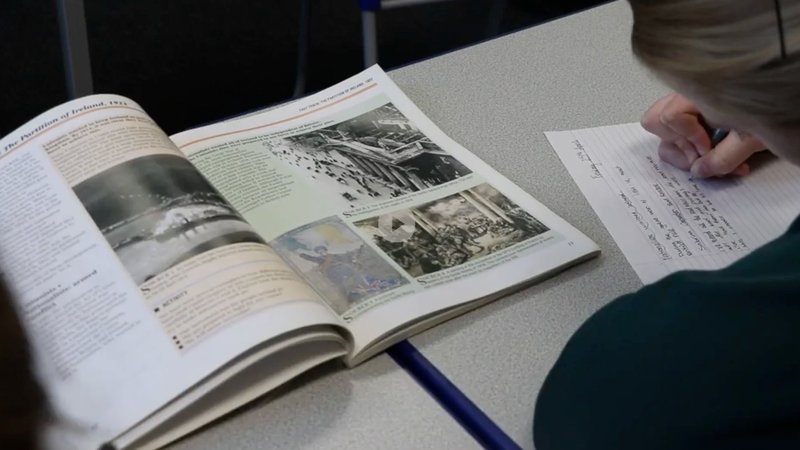 History Belongs to Us: Year 9 Girls Use Historical Significance to Craft Their CurriculumHolly Webb 2025This action research study investigated the impact of applying the skill of historical significance to meaningfully involve girls in the creation of their Year 9 history curriculum. A class of 25 girls was given explicit instruction on evaluating historical significance, and the girls were provided with multiple opportunities to evaluate the significance of the historical topics they were currently studying. The project culminated with students producing independently researched proposals for new topics they believed warranted inclusion in the school's Year 9 history curriculum, and also with the History department working with the students to implement some of these changes. Data collection techniques included questionnaires, focus groups, student work samples, and lesson observations. Thematic analysis was used to interpret the data; findings revealed that involvement in the curriculum design process and application of historical significance enhanced student agency and developed girls’ historical skills. Developing the skill of historical significance also enabled girls to distinguish between the agency of a historian and personal preferences, whilst also highlighting that comprehensive historical knowledge is crucial for students to effectively evaluate significance and exercise agency. The findings from this study are valuable for educators wanting to critically reflect on what may be considered canon in their subject or those hoping to involve students in meaningful curricular change.
 -
Increasing middle school girls’ critical engagement with AI through lightweight workshopsSolyst, J., Axon, A., Stewart, A. B., Eslami, M., & Ogan, A. (2023) 2023With the increasing presence of AI in society it is becoming vital that students understand how to use this technology safely and are aware of its potential benefits, uses, bias, and impact on ethics and privacy. AI is prevalent in everyday life, and girls are highly likely to be exposed to AI regardless of which post-school path they pursue. Researchers from Carnegie Mellon University in the USA have undertaken a project to gain a better understanding of middle school girls’ “perceptions and knowledge gaps about AI” (Solyst et al., 2023, p. 807). By developing a lightweight educational workshop (a workshop less than three hours long), the authors explored girls’ perceptions and approaches to AI with the aim of helping them avoid misinformation, provide them with useful learning materials and “lend insight into a more just future” (Solyst et al., 2023, p. 807). Currently, learning opportunities that are designed “to address children’s knowledge gaps in AI literacy” largely focus on the technical aspects of the technology. This excludes many of the ethical questions associated with AI (Solyst et al., 2023, p. 807). The researchers who developed this paper were also concerned about the limited understanding “of how girls perceive and learn about AI”, with a risk that this may “potentially [compound] existing inequities in AI representation” (Solyst et al., 2023, p. 807). This project explored a learner-centred education format to support middle school girls to fill their knowledge gaps around AI in a shorter workshop form. This is an important new contribution for educators as it provides an alternative to existing programmes that are more than three hours long, or are run as an intensive workshop session. The workshops were specifically targeted at middle school girls and assumed that participants had no prior computing or AI-related knowledge. They were focussed on “critical and creative thinking about AI systems and ethics, and supported learners in thinking about training data” (Solyst et al., 2023, p. 807). The workshops were also designed around an asset-based approach (rather than a deficit-based approach), and drew on girls’ prior “knowledge and interests as a base for further learning and engagement” (Solyst et al., 2023, p. 807). This is important because it has been shown to be a successful way to “support girls of diverse backgrounds in learning computing” (Solyst et al., 2023, p. 807). The researchers considered girls’ understandings and perceptions before, during and after the workshop through observations of the workshop session, surveys and interviews with participants. The workshop was run as a standalone module offered within an all-girls computing camp. Participants for the project were recruited via BoltGirls (a robotics-focused organisation in the east coast of the US) and AmazingGirls (a general girls organisation in the southwest of the US). The workshop ran for approximately 90 minutes, which included educational content and interactive activities. Workshop content was focussed on the concepts of bias, algorithms, and definitions of AI (including training data, power, and how AI can identify or misidentify content). During the interactive sections of the workshop, this was extended to consider how AI could be used to solve challenges in the girls’ own communities and a problem affecting the world more generally. This focussed on how AI could help solve the problem, but also risks of harm and how this could be mitigated. While the workshop was interactive, there was “less use of interactive tools” and a greater focus on “group discussions and ideation… as a means to understand opinions, perceptions, and knowledge gaps” (Solyst et al., 2023, p. 813). Many girls who participated were able to describe AI without technical details prior to completing the workshop. There was an improvement in technical awareness following participation, and a “more complex understanding of AI” compared to the pre-workshops surveys (Solyst et al., 2023, p. 810). The girls also showed an increase in ability to talk about AI, with a much more nuanced approach to intelligence and AI, and comparisons between artificial and human intelligence. This included the recognition of different types of knowledge and intelligence, understanding the role of “informational knowledge and facts”, and being able to recognise limitations in the capabilities of AI technology (Solyst et al., 2023, p. 810). The workshops discussed algorithmic bias, and girls were able to identify bias in the context of AI providing misinformation. This included concepts such as racism, and the ability to critically analyse content to discuss implications for society. Girls raised concerns about how AI uses data, especially in relation to privacy, although they did not always specifically link this to AI, and instead focussed on the risk of hacking when discussing chatbots and digital assistants. While some participants were able to identify t